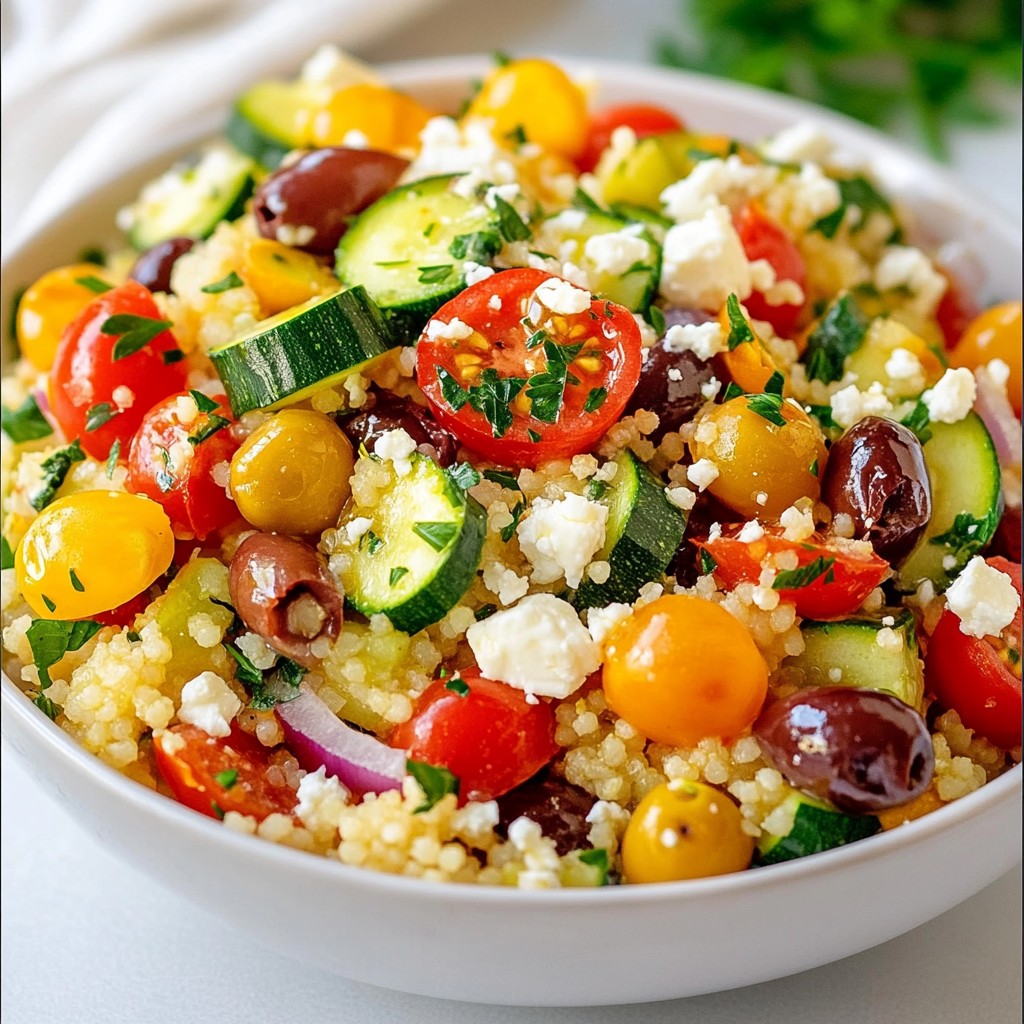
Looking for a fresh, flavorful dish that’s easy to make? Mediterranean Veggie Couscous is your answer! This vibrant meal combines veggies, herbs, and spices to create a delightful mix. Packed with color and taste, it’s perfect for any occasion. I’ll show you step-by-step how to whip it up while offering tips for tasty swaps. Let’s dive into this delicious recipe and bring the Mediterranean to your table!
Why I Love This Recipe
- Fresh Ingredients: This recipe is packed with vibrant, fresh vegetables that not only add flavor but also provide essential nutrients.
- Quick and Easy: With a total prep and cook time of just 25 minutes, this dish is perfect for busy weeknights or a last-minute gathering.
- Versatile Dish: It can be served warm or cold, making it a great option for meal prep, picnics, or as a side dish at barbecues.
- Flavorful Combination: The mix of Mediterranean flavors, including feta, olives, and lemon, creates a deliciously satisfying meal that everyone will love.
Ingredients
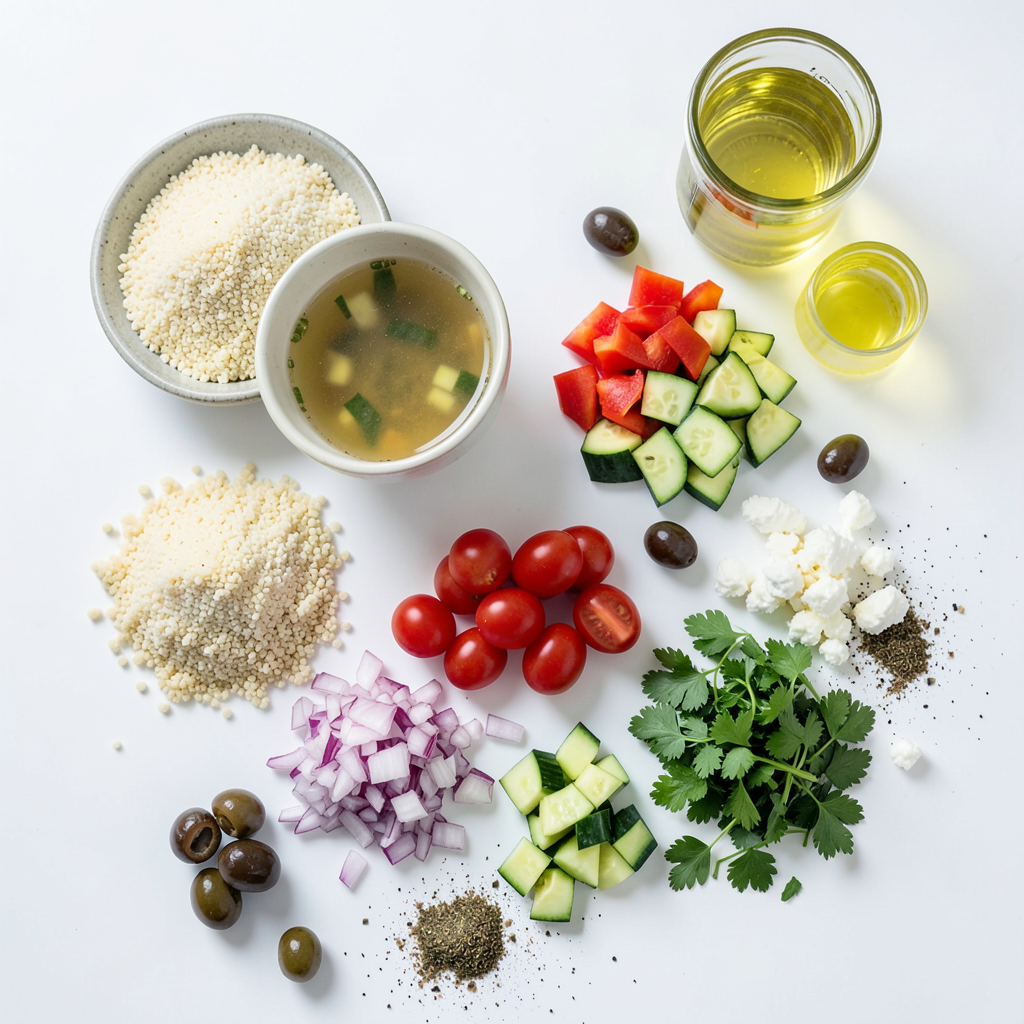
To make Mediterranean Veggie Couscous, gather these fresh and tasty ingredients:
- 1 cup couscous
- 1 1/4 cups vegetable broth (or water)
- 1 medium zucchini, diced
- 1 red bell pepper, diced
- 1 cup cherry tomatoes, halved
- 1/2 red onion, finely chopped
- 1/2 cup cucumber, diced
- 1/4 cup Kalamata olives, sliced
- 1/4 cup feta cheese, crumbled
- 1/4 cup fresh parsley, chopped
- 2 tablespoons olive oil
- 1 tablespoon lemon juice
- 1 teaspoon dried oregano
- Salt and black pepper
These ingredients blend together to create a vibrant, flavorful dish. Each item adds a unique taste and texture. The couscous serves as a fluffy base, while the veggies provide crunch and color. Kalamata olives add a briny depth, and feta brings creaminess. Fresh parsley brightens everything.
Using quality ingredients makes a big difference. Fresh vegetables and herbs enhance the taste. If you opt for homemade vegetable broth, the flavor deepens even more. Always taste your dish as you cook. Adjust salt, lemon, and pepper to your liking. This ensures a delicious meal every time you prepare it.
Step-by-Step Instructions
Preparing the Couscous
First, pour 1 1/4 cups of vegetable broth into a medium saucepan. Bring the broth to a boil over high heat. This step is important to ensure the couscous cooks well. Once the broth is boiling, remove it from the heat. Stir in 1 cup of couscous. Cover the pan with a lid and let it sit for about 5 minutes. This resting time helps the couscous absorb the liquid and become fluffy.
Cooking the Vegetables
While the couscous is resting, heat 2 tablespoons of olive oil in a large skillet over medium heat. Add the diced zucchini and red bell pepper. Sauté these veggies for about 4-5 minutes. Stir often to make sure they cook evenly but remain slightly firm. Next, add the chopped red onion and halved cherry tomatoes. Cook for an additional 2-3 minutes. The onion should turn translucent, and the tomatoes should soften. Don't forget to season with salt, black pepper, and 1 teaspoon of dried oregano for extra flavor.
Combining Ingredients
Now, it’s time to mix everything. Fluff the couscous gently with a fork to break up any clumps. Add the fluffy couscous to the skillet with the sautéed vegetables. Next, stir in 1/2 cup of diced cucumber, 1/4 cup of sliced Kalamata olives, and 1 tablespoon of freshly squeezed lemon juice. Toss in 1/4 cup of finely chopped fresh parsley as well. Mix everything well to ensure all the flavors come together. Finally, sprinkle 1/4 cup of crumbled feta cheese on top. Give everything a gentle toss to blend the creamy cheese into the dish.
Taste the couscous before serving. Adjust the seasoning with more salt, pepper, or lemon juice if needed.
Tips & Tricks
Ingredient Swaps
You can easily swap some veggies in this dish. For a twist, try:
- Eggplant instead of zucchini.
- Yellow bell pepper for extra sweetness.
- Spinach or kale for added greens.
If you don’t have feta, use:
- Goat cheese for a tangy flavor.
- Ricotta for a creamier texture.
- Vegan cheese for a dairy-free option.
Cooking Techniques
Sautéing veggies well is key. Here are my best tips:
- Use medium heat to avoid burning.
- Cut vegetables into even sizes for even cooking.
- Stir often to keep them from sticking.
For couscous, keep its texture light:
- Avoid overcooking it in the broth.
- Let it rest covered after adding to the broth.
- Fluff it gently with a fork before mixing.
Serving Suggestions
Presentation makes a big difference. To serve this dish:
- Use a bright bowl to show off the colors.
- Garnish with fresh parsley and whole Kalamata olives for style.
- Serve warm to keep flavors fresh.
Pair it with:
- Grilled chicken or fish for protein.
- A fresh salad for crunch.
- A light white wine for a complete meal experience.
Pro Tips
- Use Fresh Ingredients: Whenever possible, opt for fresh vegetables and herbs to enhance the flavors of your couscous dish.
- Customize Your Veggies: Feel free to swap out or add your favorite vegetables; this recipe is very versatile and can accommodate various seasonal produce.
- Perfecting the Texture: Avoid overcooking the couscous; it should be fluffy and slightly al dente for the best texture.
- Make It a Meal: To turn this side dish into a main course, add protein like grilled chicken, chickpeas, or shrimp for a more filling option.
Variations
Mediterranean Couscous Salad
You can make this dish even fresher by adding more raw veggies. Try adding diced carrots, chopped spinach, or even radishes for crunch. You might also enjoy adding proteins like chickpeas or grilled chicken. This makes it filling and perfect for a lunch or light dinner.
Spicy Version
If you love heat, spice it up! You can add spicy elements to your couscous. Using harissa gives a nice kick. Crushed red pepper works well too. Just be careful not to add too much at once. You can always taste and adjust!
One-Pot Meal
For a quick and easy dinner, try a one-pot method. You can cook everything in one pot for less clean-up. Adjust the broth quantity to make sure the couscous cooks right. Just add all your veggies and broth at once, then stir in the couscous. It’s fast and simple!
Storage Info
Refrigeration Guidelines
To store leftovers, let the couscous cool down first. Place it in an airtight container. This helps keep it fresh for later meals. Glass or plastic containers work well. Avoid using metal containers, as they can react with the food.
Freezing Couscous
For freezing, use a freezer-safe container. Make sure to leave some space at the top. This allows for expansion as it freezes. Try to use it within three months for the best taste. When you're ready to eat, thaw it in the fridge overnight. Reheat in the microwave or on the stove. Add a splash of vegetable broth to keep it moist.
Shelf Life
In the fridge, couscous lasts about three to five days. In the freezer, it can last up to three months. Look for signs of spoilage like off smells or changes in texture. If it smells sour or feels slimy, it's best to toss it. Always trust your senses to ensure food safety.
FAQs
What is couscous made from?
Couscous is made from wheat. It is tiny granules of semolina. Semolina comes from durum wheat. The granules are steamed to make couscous light and fluffy.
Can I make Mediterranean Veggie Couscous ahead of time?
Yes, you can make this dish ahead. Prepare it, then cool it down. Store it in the fridge. It stays fresh for about three days. Just reheat it before serving.
Is couscous healthy?
Couscous is a healthy choice. It is low in fat and high in carbs. It also provides some protein. Adding veggies boosts the nutrition even more. You get vitamins and minerals from the vegetables.
How can I make this gluten-free?
To make this dish gluten-free, use gluten-free couscous. There are options made from rice or corn. These alternatives give you a similar texture without gluten.
What other herbs can I use in the recipe?
You can use a variety of herbs. Try basil, thyme, or dill for a twist. Fresh mint adds a nice touch too. Experiment with what you like best!
You can create a tasty dish with couscous and fresh veggies. We covered ingredient lists, step-by-step instructions, and handy tips. You learned about variations and storage to keep meals fresh. Making this dish lets you customize it to your taste. Enjoy mixing flavors and colors for a flavorful meal. Remember, cooking should be fun and easy!