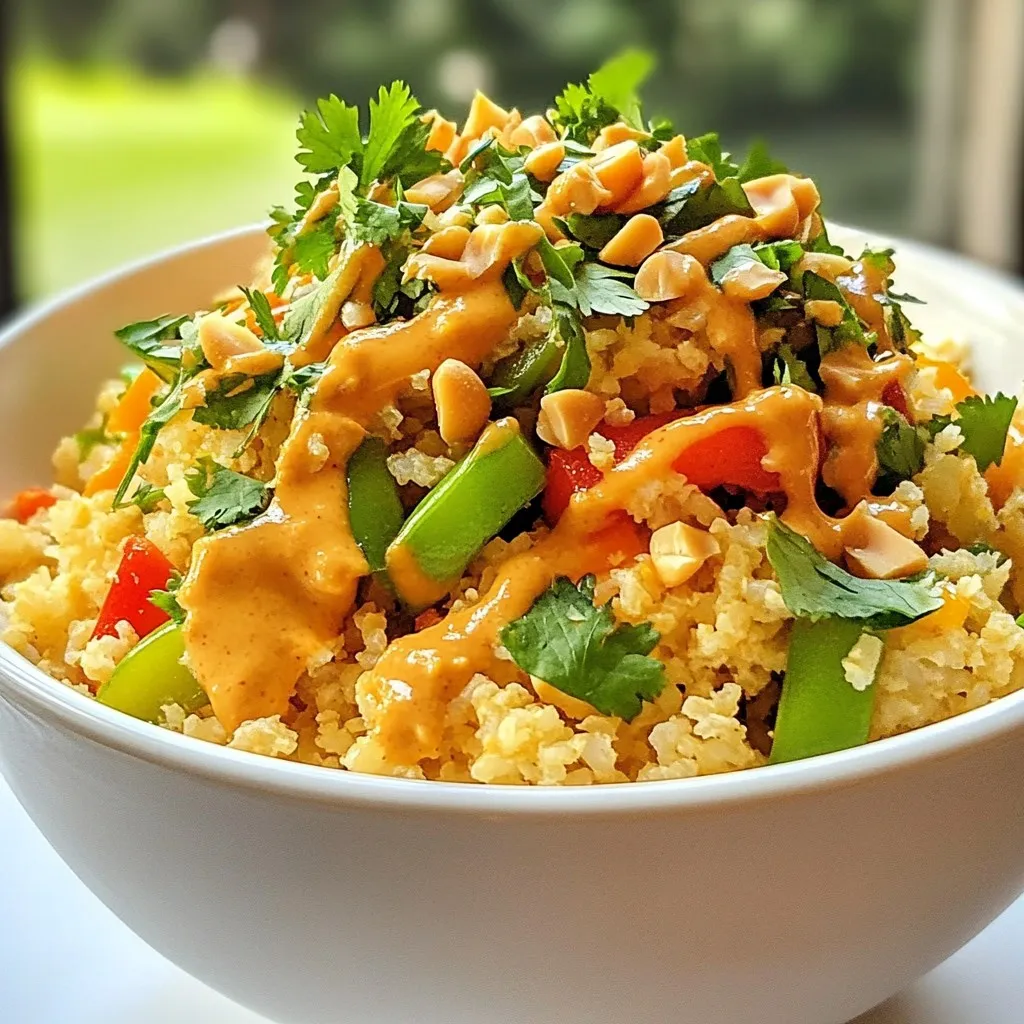
If you crave bold flavors and healthy meals, you’re in the right place! My Spicy Thai Peanut Cauliflower Rice is a tasty twist on a classic dish. This colorful meal packs a punch with vibrant veggies and rich peanut sauce. In just a few simple steps, you can whip up a delightful dish that satisfies your taste buds. Ready to dive into this flavor adventure? Let’s get cooking!
Why I Love This Recipe
- Bold Flavors: This dish combines the rich, creamy taste of peanut butter with the zesty kick of lime and sriracha, creating a delightful flavor explosion.
- Quick and Easy: With a total time of just 20 minutes, this recipe is perfect for busy weeknights when you want something nutritious without spending hours in the kitchen.
- Vegetable Packed: Filled with colorful vegetables like bell peppers, carrots, and snap peas, this dish is not only delicious but also provides a variety of nutrients.
- Customizable Heat: Adjust the amount of sriracha to your preference, making it easy to create a dish that can cater to both mild and spicy palates.
Ingredients
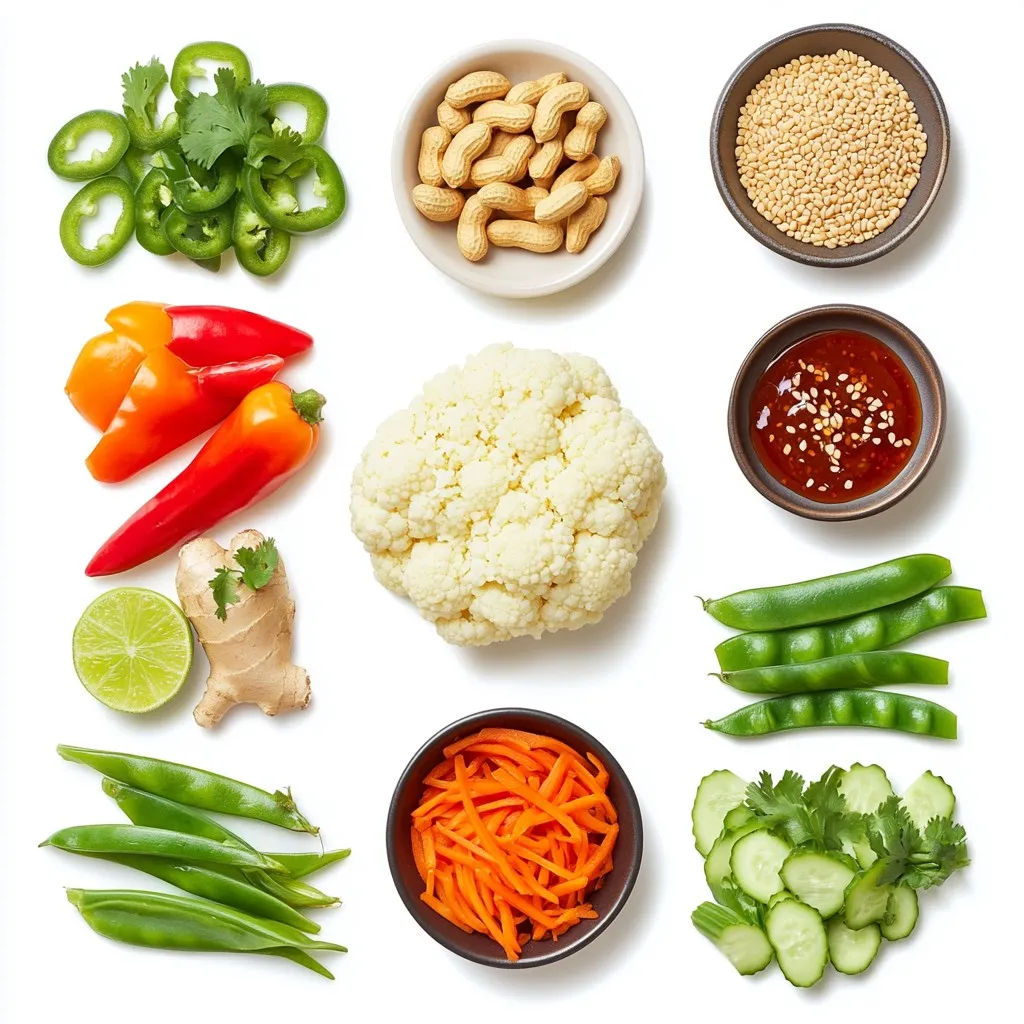
To make Spicy Thai Peanut Cauliflower Rice, you will need these fresh ingredients:
– Cauliflower
– Coconut oil
– Bell pepper (red or yellow)
– Small carrot
– Snap peas
– Green onions
– Garlic
– Fresh ginger
– Smooth peanut butter
– Soy sauce (or tamari)
– Fresh lime juice
– Sriracha
– Fresh cilantro
– Crushed peanuts
Each of these adds a special touch to the dish. Cauliflower gives a light base. The coconut oil adds a hint of sweetness, while bell peppers bring color and crunch. Carrots add sweetness and snap peas add a fresh crunch.
Garlic and ginger provide a zesty kick. Peanut butter makes the dish creamy and rich. Soy sauce or tamari gives a savory umami flavor. Lime juice brightens the dish with acidity, while sriracha adds the heat you crave. Finally, cilantro and crushed peanuts offer freshness and texture.
These ingredients work together to create a beautiful bowl of flavors. Each bite gives you a taste of Thailand. You will love how easy and fun it is to make this dish!
Step-by-Step Instructions
How to Rice Cauliflower
To start, take a medium head of cauliflower. Remove the leaves and stem. Cut the cauliflower into smaller florets. You can use a food processor to pulse these florets until they look like rice. If you don’t have a food processor, a box grater works too. Just grate the florets until they resemble grains of rice.
Sautéing Aromatics
Next, grab a large skillet or wok. Melt one tablespoon of coconut oil over medium heat. Once the oil is hot, add two minced cloves of garlic and one tablespoon of minced fresh ginger. Sauté for about one to two minutes. You want them to be fragrant and slightly golden, which adds depth to the dish.
Cooking the Vegetables
Now, add one diced bell pepper, either red or yellow, and one small grated carrot to the skillet. Sauté these for another three to four minutes. They should soften and start to look tender. This step brings out their natural sweetness and adds color.
Incorporating Cauliflower Rice
It’s time to add the riced cauliflower. Toss in half a cup of snap peas, trimmed and cut in half, along with the cauliflower. Mix everything well to combine. Cook this mixture for about five to seven minutes. Stir occasionally, ensuring the cauliflower is tender but still has a slight bite. We want to avoid mushy rice!
Whisking the Peanut Sauce
While the vegetables cook, prepare the peanut sauce. In a small bowl, mix together a quarter cup of smooth peanut butter, two tablespoons of soy sauce, one tablespoon of fresh lime juice, and one to two teaspoons of sriracha. Adjust the sriracha based on your heat preference. Whisk everything until smooth. If it’s too thick, add a splash of water to thin it out.
Combining and Heating the Dish
Pour the peanut sauce over the cauliflower rice mixture in the skillet. Stir well to coat all the veggies and cauliflower evenly. Let this cook for an additional two to three minutes. This allows all the flavors to meld together beautifully, making each bite flavorful.
Finishing Touches with Green Onions
Finally, remove the skillet from heat. Gently fold in three sliced green onions, saving some for garnish later. This adds a fresh crunch to the dish. Now, you have a colorful and tasty meal ready to serve!
Tips & Tricks
Achieving the Perfect Cauliflower Rice Texture
To get the best texture, use a food processor. Cut the cauliflower into small florets first. Pulse until it looks like rice, but not mushy. If you don’t have a food processor, use a box grater. Grate slowly to keep the pieces even. You want the cauliflower to be light and fluffy. Avoid overcooking it in the pan. Stir often and remove it when still slightly firm.
Adjusting Spice Levels
Spice is key in this dish. If you love heat, add more sriracha. Start with one teaspoon, then taste. You can always add more, but can’t take it out! If you prefer milder flavors, just skip the sriracha or use less. Another option is to add a splash of coconut milk to cool it down. Lime juice also helps balance the spice.
Best Cooking Equipment to Use
Using the right tools makes cooking easier. A large skillet or wok works best for this dish. It gives you room to stir well. A good food processor is also helpful for ricing cauliflower. You should have a whisk for mixing the peanut sauce. For chopping, a sharp knife saves time and effort. Lastly, keep measuring cups handy for accuracy.
Pro Tips
- Choose Fresh Ingredients: Always opt for fresh vegetables and herbs to enhance the flavor and nutritional value of your dish.
- Adjust Spice Level: Customize the heat by adjusting the amount of sriracha in the peanut sauce according to your personal preference.
- Meal Prep Friendly: This recipe can be made in advance and stored in an airtight container in the fridge for up to 3 days, making it perfect for meal prep.
- Experiment with Add-Ins: Feel free to add other vegetables like zucchini or broccoli, or even protein such as tofu or chicken, to make the dish more filling.
Variations
Adding Protein Options: Tofu or Chicken
You can make this dish heartier by adding protein. Tofu is a great choice. Use firm tofu and press it to remove excess water. Cut it into cubes and pan-fry until golden. If you prefer chicken, use diced chicken breast. Cook it in the skillet before adding the vegetables. Both options blend well with the spicy sauce and make this dish more filling.
Substituting Vegetables
Feel free to swap out the vegetables for what you have on hand. Zucchini, broccoli, or even corn work well. Just make sure to chop them into small pieces. This keeps the cooking time short and ensures even cooking. Each vegetable will bring its own flavor, making it unique every time.
Making it Vegan-Friendly
To make this dish vegan, simply use tofu instead of chicken. Also, ensure your soy sauce is gluten-free if needed. Many brands offer vegan peanut butter, but check the label to be sure. This way, you can enjoy all the flavors without any animal products.
Storage Info
Best Practices for Storing Leftovers
To keep your spicy Thai peanut cauliflower rice fresh, store it in an airtight container. Allow the dish to cool down before sealing it. This helps prevent condensation, which can make the rice soggy. Ideally, you should eat leftovers within three days for the best taste and quality.
Reheating Instructions
When reheating, you can use a microwave or a skillet. For the microwave, place the rice in a bowl and cover it with a damp paper towel. Heat in short bursts, stirring in between, until hot. In a skillet, add a splash of water to the rice and heat it over medium-low heat. Stir often to avoid burning. This keeps it moist and tasty.
Freezing Recommendations
If you want to freeze your cauliflower rice, pack it tightly in a freezer-safe bag. Squeeze out as much air as possible. This prevents freezer burn. You can store it for up to a month. When you’re ready to eat, thaw it overnight in the fridge. Reheat as mentioned earlier for a quick meal.
FAQs
What is cauliflower rice?
Cauliflower rice is simply cauliflower chopped into tiny pieces. You can make it by grating or processing cauliflower. It looks like rice but has fewer carbs. This makes it a great substitute for regular rice in many dishes.
Can I make this dish in advance?
Yes, you can make this dish ahead of time. Cook the spicy Thai peanut cauliflower rice, let it cool, and store it in the fridge. It lasts for about three days. Reheat it in a pan or microwave when you’re ready to enjoy.
How can I make the dish spicier?
To add more heat, increase the sriracha. You can start with one teaspoon and taste it. If you want even more spice, add chopped fresh chili peppers or a dash of chili flakes. Just be careful not to overdo it!
Is there a gluten-free alternative for soy sauce?
Yes, you can use tamari instead of soy sauce. Tamari is a gluten-free soy sauce option. It has a similar flavor, so it works well in this recipe. Always check the label to ensure it’s gluten-free.
What can I serve with Spicy Thai Peanut Cauliflower Rice?
This dish pairs well with grilled chicken, shrimp, or tofu for added protein. You can also serve it with a fresh salad or spring rolls. Garnishing with extra cilantro and crushed peanuts adds a nice touch!
This blog post shared how to create a delicious Spicy Thai Peanut Cauliflower Rice. You learned about key ingredients, step-by-step cooking methods, and helpful tips. Variations allow for personal touches, and storage info keeps leftovers fresh. Cooking should be fun and easy. Experiment with flavors and enjoy your meals! With this guide, you have the tools to make a healthy dish that suits your taste. Go ahead and spice up your kitchen adventure