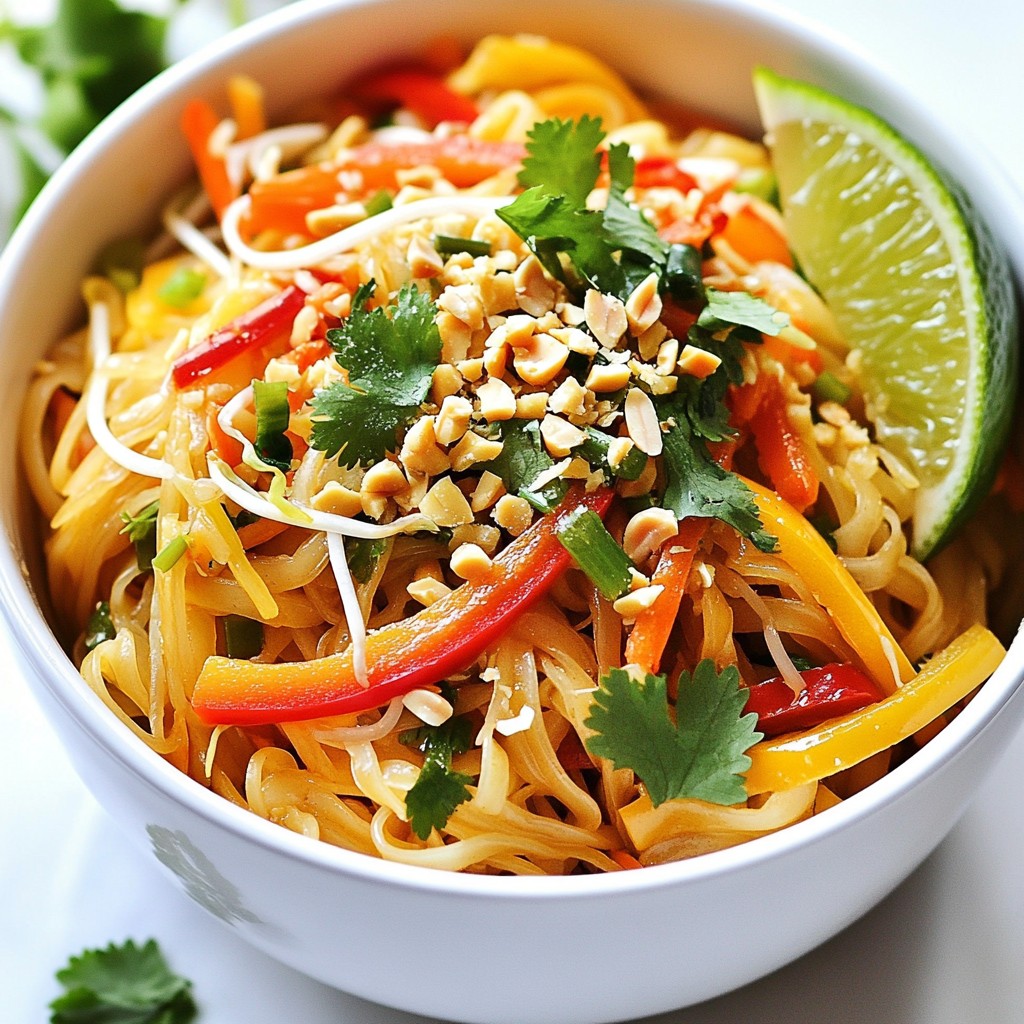
Ready to enjoy a bowl of Vegetable Pad Thai that’s packed with flavor? This dish is simple and quick to make, making it perfect for any meal. I’ll guide you through easy steps and share tips for customizing this classic recipe to fit your taste. Whether you’re a pro in the kitchen or a beginner, you can whip up a delicious meal that will impress everyone. Let’s get started!
Why I Love This Recipe
- Quick and Easy: This Veggie Delight Pad Thai can be whipped up in just 25 minutes, making it perfect for a weeknight dinner.
- Fresh Ingredients: The colorful mix of vegetables not only adds nutrition but also makes the dish visually appealing.
- Customizable: You can easily adjust the spice level and add your favorite proteins, making it versatile for any taste.
- Deliciously Flavorful: The combination of soy sauce, tamarind, and fresh lime creates a balance of sweet, sour, and savory flavors that is truly irresistible.
Ingredients
Essential Ingredients for Vegetable Pad Thai
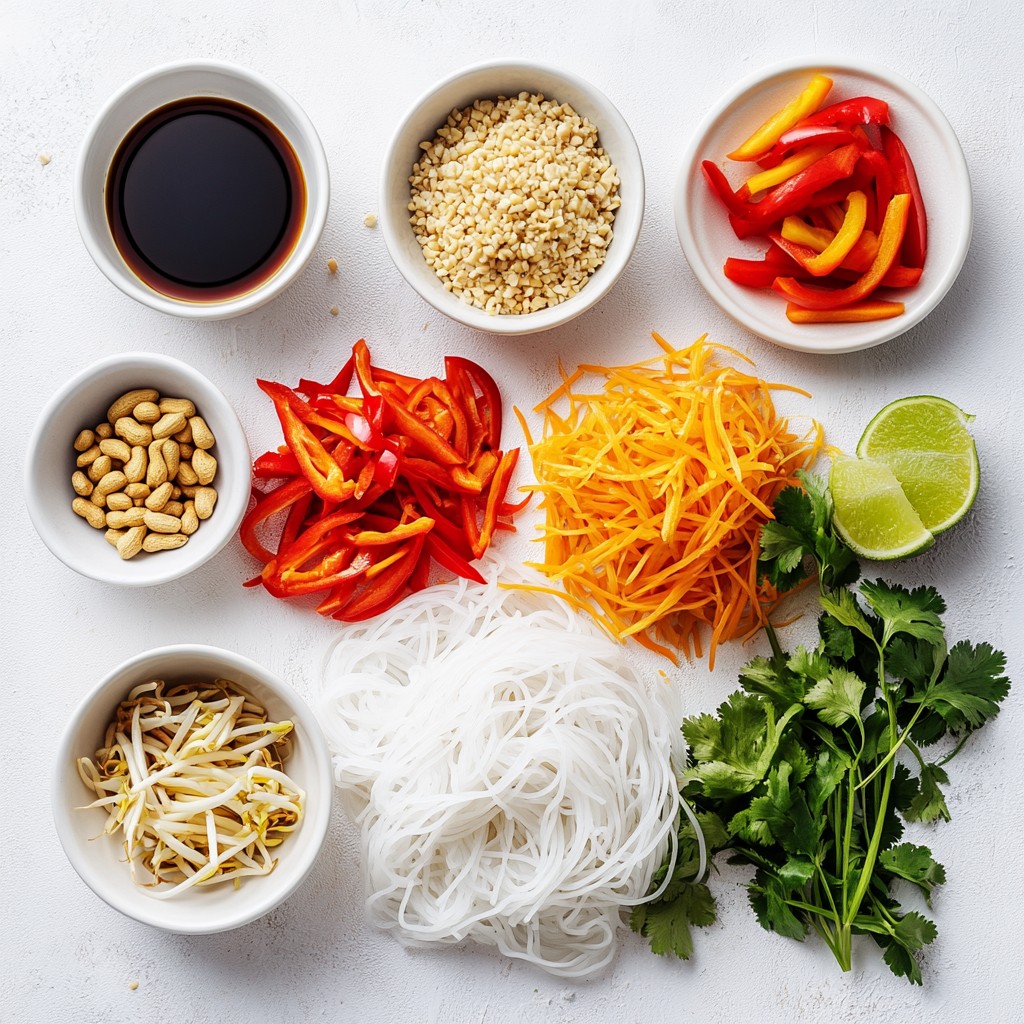
To make a great Vegetable Pad Thai, you need these key ingredients:
- 8 ounces rice noodles
- 2 tablespoons vegetable oil
- 2 cloves garlic, minced
- 1 small onion, thinly sliced
- 1 cup bell peppers, julienned (mix of red and yellow for color)
- 1 cup carrot, julienned
- 1 cup fresh bean sprouts
- 2 green onions, thinly sliced (plus more for garnish)
- 3 tablespoons soy sauce
- 2 tablespoons tamarind paste
- 1 tablespoon brown sugar
- 1 teaspoon chili powder (adjust based on your spice preference)
These ingredients combine to create bold flavors and a lovely texture. The rice noodles serve as the base, while the veggies add color and crunch.
Optional Ingredients for Additional Flavor
You can enhance your Vegetable Pad Thai with these optional ingredients:
- 2 eggs, lightly beaten (for protein)
- 1/4 cup crushed peanuts (for garnish)
Adding eggs gives a rich taste and a nice texture. Peanuts add a crunchy finish that contrasts with the soft noodles.
Suggested Garnishes
When serving your Vegetable Pad Thai, consider these garnishes:
- Fresh cilantro leaves
- Lime wedges (for a refreshing serving)
Garnishing with cilantro adds freshness and a pop of color. Lime wedges provide a zesty kick that enhances the dish's flavor.
Step-by-Step Instructions
Cooking the Rice Noodles
To start, boil a big pot of water. Once the water is bubbling, add 8 ounces of rice noodles. Cook these noodles for about 5 to 7 minutes. You want them soft but still firm. After cooking, drain the noodles well. Toss them with a teaspoon of oil to keep them from sticking. Set these aside while you prepare the rest.
Preparing the Sauce
Next, take a small bowl. In it, mix together 3 tablespoons of soy sauce, 2 tablespoons of tamarind paste, 1 tablespoon of brown sugar, and 1 teaspoon of chili powder. Use a whisk to blend these ingredients well. This sauce will add a nice flavor to your dish, so set it aside for later.
Sautéing the Vegetables
Now, grab a large skillet or wok. Heat 2 tablespoons of vegetable oil over medium heat. Add 2 cloves of minced garlic and 1 small sliced onion. Cook them for about 2 to 3 minutes. You want the onion to turn clear and smell good.
Combining Noodles and Sauce
Add your bell peppers and carrots to the skillet. Stir-fry these for 4 to 5 minutes until they are tender but still crisp. Then, add the cooked rice noodles. Pour the sauce over everything and mix well. Toss everything for about 3 to 4 minutes. Make sure the noodles soak in the sauce and get warm.
Adding Eggs (Optional)
If you want to add eggs for protein, push the noodle mix to one side of the skillet. Pour 2 beaten eggs into the empty side. Scramble the eggs until they are fully cooked. Once done, mix the scrambled eggs into the noodles and veggies.
Finishing Touches
Finally, fold in 1 cup of fresh bean sprouts and half of the sliced green onions. Cook for just 1 more minute. This warms the sprouts without losing their crunch. Turn off the heat and get ready to serve.
Tips & Tricks
Best Practices for Perfect Noodles
To cook rice noodles well, start with boiling water. Add the noodles and cook for 5 to 7 minutes. Check for al dente texture. Drain them and toss with a little oil. This step helps to keep them from sticking. Make sure to avoid overcooking, as they can become mushy.
How to Adjust Spice Level
If you like spice, add more chili powder. Start with one teaspoon and taste as you go. You can always add more, but you can’t take it out. For less heat, reduce the chili powder. You can also use mild sauces or fresh herbs for flavor.
Making It Vegan/Gluten-Free
To make this dish vegan, skip the eggs. The noodles are usually gluten-free if you choose rice noodles. Check labels to be sure. Use gluten-free soy sauce to stay true to the diet. You can replace tamarind with lime juice for a tangy flavor.
Pro Tips
- Choose the Right Noodles: For the best texture, look for flat rice noodles labeled as "Pad Thai" or "wide rice noodles." These will give you the authentic taste of traditional Pad Thai.
- Customize Your Veggies: Feel free to swap in your favorite vegetables or what's in season. Broccoli, snap peas, or zucchini also work great in this dish.
- Perfecting the Sauce: Adjust the sauce ingredients to your taste. If you prefer it sweeter, add a bit more brown sugar; for extra tang, add more tamarind paste.
- Serve Fresh: Pad Thai is best enjoyed fresh. If you have leftovers, store them in the fridge, but be aware that the noodles may become softer upon reheating.
Variations
Protein Additions: Tofu or Tempeh
You can add protein to your Vegetable Pad Thai. Tofu is a great choice. It soaks up flavors well. Tempeh is another option. It has a nutty taste and a firmer texture. For tofu, press it first to remove water. Cut it into cubes, then sauté until golden. For tempeh, slice it thin and cook until crisp. Both options provide protein and enhance your dish.
Vegetable Swaps for Seasonal Ingredients
Feel free to mix in seasonal veggies! This keeps your Pad Thai fresh and tasty. Try zucchini, snap peas, or mushrooms. You can also use broccoli or bok choy for a crunch. Just chop them into small pieces for even cooking. Each season brings new flavors. Don’t be afraid to get creative with what you have.
Regional Influences on Pad Thai
Pad Thai varies by region. In Thailand, you may find shrimp or chicken in the dish. Some areas add lime leaves or peanuts for extra flavor. In other regions, you might see sweet potatoes or eggplant. These changes reflect local tastes and ingredients. Explore these variations to discover new tastes and styles for your Vegetable Pad Thai.
Storage Info
How to Store Leftover Vegetable Pad Thai
After enjoying your meal, let the Vegetable Pad Thai cool. Place it in an airtight container. Store it in the fridge for up to three days. This keeps the flavors fresh. If you have leftovers, try to separate the noodles from the sauce. This helps prevent sogginess.
Reheating Tips for Best Texture
To reheat, use a skillet over medium heat. Add a splash of water or oil to help steam the noodles. Stir gently to avoid sticking. Heat until warm, about 5-7 minutes. You can also use a microwave. Heat in short bursts of 30 seconds. Stir in between to heat evenly.
Freezing Options
You can freeze Vegetable Pad Thai for longer storage. Portion it into freezer-safe bags. Remove as much air as possible before sealing. This prevents freezer burn. It can last for up to three months in the freezer. To reheat, thaw overnight in the fridge. Then, follow the skillet method for best results.
FAQs
What type of noodles are used in Pad Thai?
Pad Thai uses rice noodles. These noodles are soft and chewy. They soak up flavors well. You can find them in most stores. They often come in flat strips.
Can I make this recipe ahead of time?
Yes, you can make this dish ahead of time. Cook the noodles and veggies. Store them in the fridge. When ready, heat everything up. Add the sauce just before serving for best taste.
How do I make Pad Thai less sticky?
To avoid stickiness, rinse the noodles after cooking. Toss them with a little oil too. This keeps them separate. Stir-frying them quickly also helps.
Is Pad Thai gluten-free?
Traditional Pad Thai is not gluten-free. The soy sauce often contains gluten. You can use gluten-free soy sauce instead. This keeps the dish safe for those with gluten allergies.
What can I substitute for tamarind paste?
If you don't have tamarind paste, use lime juice and brown sugar. This mix gives a similar tangy flavor. You can also try vinegar if needed. Adjust the amounts to taste.
You learned about making a tasty Vegetable Pad Thai. We covered key ingredients, cooking steps, and helpful tips for success. Remember, you can adjust flavors and swap veggies to fit your taste. Storing leftovers is easy, and reheating keeps the dish great. I hope you feel more confident cooking this dish. Enjoy creating your own version of Pad Thai!