Go Back
- 200g rice noodles - 1 can (400ml) of creamy coconut milk - 1 tablespoon fragrant red curry paste - 1 tablespoon vegetable oil - 1 medium onion, thinly sliced - 2 cloves of fresh garlic, minced - 1 tablespoon of freshly grated ginger - 1 bell pepper (any vibrant color), sliced into strips - 1 cup crisp snap peas, trimmed - 1 cup broccoli florets (fresh or frozen) - 2 tablespoons soy sauce (or tamari for gluten-free) - 1 tablespoon fresh lime juice - Fresh cilantro leaves, for garnish - Lime wedges, for serving Coconut curry noodle bowls pack a punch of flavor. You need rice noodles for that perfect base. The creamy coconut milk acts as a rich sauce. Red curry paste adds spice and depth. Finally, adding vegetable oil helps sauté the aromatics. Next, we bring in fresh vegetables. Onions add sweetness, and garlic gives a warm aroma. Ginger brightens the dish with its zing. Colorful bell peppers bring crunch. Snap peas and broccoli add vibrant texture. For seasoning, soy sauce provides umami. Fresh lime juice adds a bright kick. Garnish with cilantro for a fresh finish. Lime wedges on the side let you personalize each bite. Enjoy this tasty, satisfying meal! {{ingredient_image_2}} Start by boiling water in a large pot. Add the rice noodles and cook them according to the package instructions. This usually takes about 4-6 minutes. Once cooked, drain the noodles in a colander and set them aside. In a large pot or deep skillet, heat the vegetable oil over medium heat. Once hot, add the thinly sliced onion. Sauté for about 3-4 minutes, or until the onion becomes translucent and soft. Stir in the minced garlic and grated ginger. Cook for an additional minute, stirring frequently until the mixture becomes fragrant and aromatic. Add the red curry paste to the pot. Cook for about 2 minutes, stirring well. This helps the paste blend fully and develop its flavors. Pour in the creamy coconut milk, stirring gently to mix with the onion mixture. Allow this to come to a gentle simmer over low heat. Carefully add the sliced bell pepper, snap peas, and broccoli florets to the simmering coconut curry. Cook for 5-7 minutes, or until the vegetables are tender but still crisp. Stir in the soy sauce and freshly squeezed lime juice. Taste the mixture and adjust seasoning if needed. You can add more soy sauce for saltiness or lime juice for brightness. In serving bowls, evenly distribute the cooked rice noodles. Ladle the coconut curry mixture generously over the noodles. Be sure to mix in a good amount of vegetables and sauce in each bowl. Finish by garnishing each bowl with fresh cilantro leaves. Serve your coconut curry noodle bowls with lime wedges on the side. This lets everyone add an extra zing of flavor to their dish. To avoid mushy noodles, watch the cooking time. I recommend cooking rice noodles for just 4-6 minutes. Test them a minute early to ensure they stay firm. Drain them in a colander and rinse with cold water. This stops the cooking and helps keep them chewy. Adjusting spice levels can make this dish your own. If you want more heat, add a bit more red curry paste. For less spice, try using half the amount. You can also mix in chili flakes or fresh peppers. Always taste as you go! This way, you can find the perfect balance for your palate. To make this dish vegan, simply use vegetable oil and check your curry paste. Most red curry pastes are vegan, but always read the label. For gluten-free, swap soy sauce for tamari. The rest of the ingredients are naturally gluten-free. Enjoy this dish without worry! Pro Tips Perfect Noodle Texture: To achieve the ideal noodle texture, rinse the cooked rice noodles under cold water to stop the cooking process. This helps prevent them from becoming mushy. Customize Your Veggies: Feel free to swap in your favorite vegetables! Carrots, zucchini, or baby corn work wonderfully in this dish, allowing you to tailor the recipe to your taste. Enhance the Flavor: For an extra burst of flavor, consider adding a teaspoon of sugar or a splash of fish sauce to the curry base. This can help balance the richness of the coconut milk. Make It Ahead: This coconut curry noodle bowl can be made ahead and stored in the refrigerator for up to 3 days. Reheat gently on the stove, adding a splash of water or coconut milk to loosen it up. {{image_4}} You can add protein to your coconut curry noodle bowls for extra flavor. Here are some great options: - Tofu: Cube firm tofu and sauté it until golden. This adds a nice texture and absorbs the curry flavors well. - Chicken: Use diced chicken breast or thighs. Cook it in the pot before adding the garlic and ginger for a richer taste. - Shrimp: Add peeled shrimp during the last few minutes of cooking. They cook quickly and bring a lovely seafood flavor. Adjusting the spice level can make your dish fit your taste. Here’s how: - Milder: Use less red curry paste or add more coconut milk. This will tone down the heat while keeping the flavor. - Spicier: Add extra red curry paste or a pinch of cayenne pepper. You can also serve it with sliced fresh chili on top for a spicy kick. Seasonal vegetables can change the dish's flavor and nutrition. Try these swaps: - Zucchini: Slice and add it for a fresh crunch. - Carrots: Use thinly sliced carrots for sweetness and color. - Spinach: Toss in fresh spinach at the end for a vibrant look and added nutrients. Feel free to get creative with these variations to make the dish your own! How do you store leftovers? Store your coconut curry noodle bowls in an airtight container. Make sure to cool the dish first. Place it in the fridge within two hours of cooking. This keeps the flavors fresh and safe to eat. The noodles can absorb moisture, so it's best to keep them separate from the curry if possible. Leftovers are good for up to three days. What are the best practices for freezing? If you want to freeze the dish, use freezer-safe containers. Let the curry cool down completely before you freeze it. Store the curry and noodles separately to prevent mushiness. You can freeze the curry for up to three months. When ready to eat, thaw it in the fridge overnight. What methods can you use for reheating without losing flavor? To reheat, you can use a microwave or stovetop. If using the microwave, heat in short intervals and stir often. For the stovetop, place the curry in a pot over low heat. Stir it gently until it warms up. If the curry is too thick after thawing, add a splash of coconut milk or water to bring it back to life. Enjoy your tasty meal! Yes, you can use many types of noodles. Here are some options: - Udon noodles: Thick and chewy, they soak up the curry well. - Soba noodles: Made from buckwheat, they add a unique flavor. - Egg noodles: These give a rich taste and texture. - Zucchini noodles: For a low-carb option, try spiralized zucchini. Feel free to experiment with your favorite noodles! Yes, this dish can be gluten-free. To make it so: - Use rice noodles instead of wheat noodles. - Replace soy sauce with tamari. Tamari is often gluten-free. Always check labels to ensure your ingredients are free from gluten. To add heat to your dish, try these tips: - Add more red curry paste for extra spice. - Include sliced fresh chili peppers in the curry. - Mix in chili flakes or sriracha for a kick. Adjust the spice to match your taste! These side dishes pair well with your Coconut Curry Noodle Bowls: - Spring rolls: Fresh or fried, they add crunch. - Asian slaw: A tangy slaw balances the curry. - Steamed rice: Serve it on the side for extra filling. - Pickled vegetables: They add a nice tang and contrast. Each choice brings something tasty to your meal! Coconut curry noodle bowls are simple and fun to make. We covered key ingredients like rice noodles, coconut milk, and fresh veggies. The step-by-step instructions show how to create a flavorful and satisfying dish. I shared tips that help you avoid mushy noodles and adjust spice levels. You can also swap proteins and vegetables for variety. This dish is versatile and easy to store. Enjoy this warm, comforting meal any day of the week. Cook with confidence, and let your taste buds rejoice!

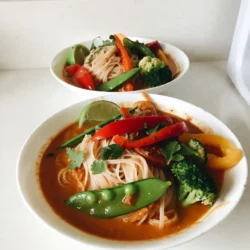
Coconut Curry Noodle Bowls

A delicious and creamy coconut curry noodle bowl packed with vibrant vegetables and flavors.
Prep Time 10 minutes
Cook Time 20 minutes
Total Time 30 minutes
Course Main Course
Cuisine Thai
Servings 4
Calories 400 kcal

Ingredients
  

  • 200 g rice noodles
  • 400 ml creamy coconut milk
  • 1 tablespoon fragrant red curry paste
  • 1 tablespoon vegetable oil
  • 1 medium onion, thinly sliced
  • 2 cloves fresh garlic, minced
  • 1 tablespoon freshly grated ginger
  • 1 bell pepper sliced into strips
  • 1 cup crisp snap peas, trimmed
  • 1 cup broccoli florets
  • 2 tablespoons soy sauce
  • 1 tablespoon fresh lime juice
  • none fresh cilantro leaves, for garnish
  • none lime wedges, for serving

Instructions
 

  • Cook the Rice Noodles: Start by boiling water in a large pot. Add the rice noodles and cook them according to the package instructions. This usually takes about 4-6 minutes. Once cooked, drain the noodles in a colander and set aside.
  • Sauté Aromatics: In a large pot or deep skillet, heat the vegetable oil over medium heat. Once hot, add the thinly sliced onion and sauté for about 3-4 minutes, or until the onion becomes translucent and soft.
  • Add Garlic and Ginger: Stir in the minced garlic and grated ginger, cooking for an additional minute, stirring frequently until the mixture becomes fragrant and aromatic.
  • Incorporate the Curry Paste: Add the red curry paste to the pot. Cook for about 2 minutes, stirring well to ensure the paste is fully incorporated and the flavors begin to develop.
  • Create the Curry Base: Pour in the creamy coconut milk, stirring gently to combine with the onion mixture. Allow this to come to a gentle simmer over low heat.
  • Add Vegetables: Carefully add the sliced bell pepper, snap peas, and broccoli florets to the simmering coconut curry. Cook for 5-7 minutes, or until the vegetables are tender yet retain a crisp texture.
  • Season the Curry: Stir in the soy sauce and freshly squeezed lime juice. Taste the mixture and adjust seasoning if needed, perhaps adding more soy sauce for saltiness or lime juice for brightness.
  • Assemble the Bowls: In serving bowls, evenly distribute the cooked rice noodles. Ladle the coconut curry mixture generously over the noodles, ensuring a good mix of vegetables and sauce in each bowl.
  • Garnish and Serve: Finish by garnishing each bowl with fresh cilantro leaves. Serve your coconut curry noodle bowls with lime wedges on the side, allowing guests to add an extra zing of flavor to their dish.

Notes

Feel free to customize the vegetables based on your preference.
Keyword coconut, curry, noodles, vegetarian